
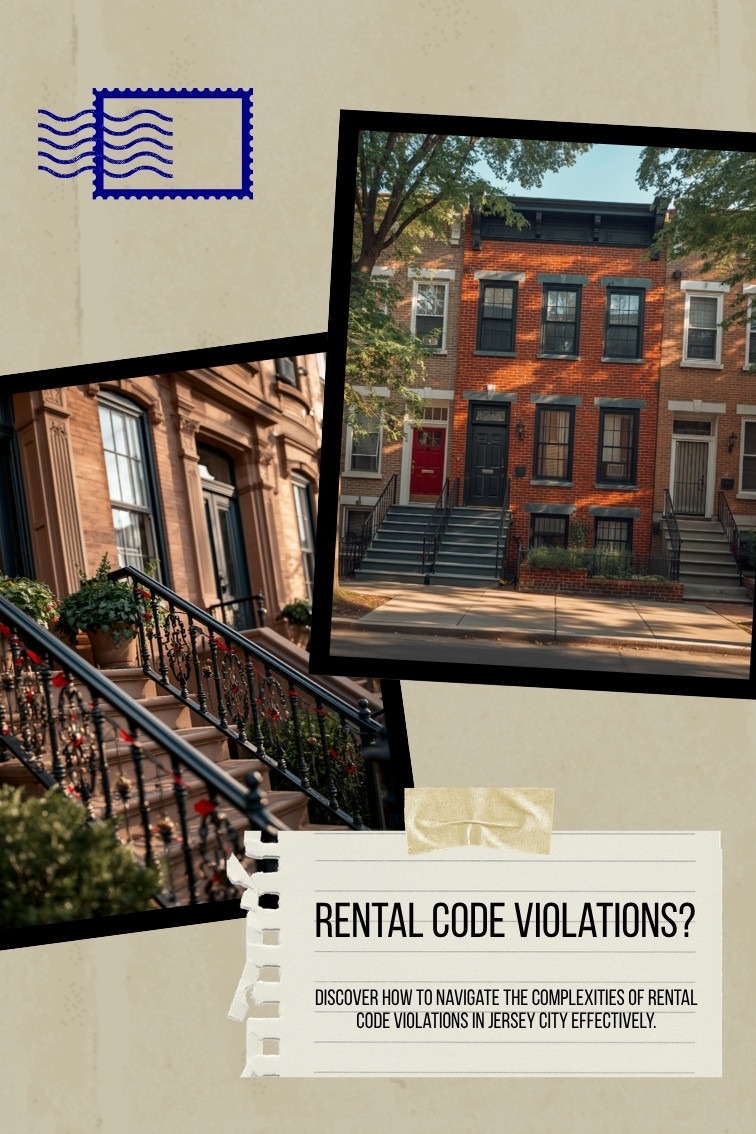
If you own a rental property in Jersey City and a code enforcement notice just landed in your mailbox, take a breath. You’re not the first landlord to go through this, and you won’t be the last — and there’s more time and more room to think it through than the letter might suggest.
Earlier this year, Jersey City launched a citywide audit of residential rental properties, checking for housing code violations and compliance with the city’s rent control ordinance, with the municipal prosecutor’s office directed to pursue the maximum penalties allowed where violations are confirmed. In plain terms: inspectors are looking at things like working smoke and carbon monoxide detectors, structural repairs, plumbing and electrical issues, and proper registration of the unit. If something doesn’t pass, you’ll typically get a notice of violation with a deadline to fix it — often called an “abatement period” — before fines start accruing through municipal court.
For a landlord who’s been managing a rental for years — maybe an inherited two-family in the Heights, or a multi-family you’ve owned since before the market took off — this kind of audit can turn “manageable” into “exhausting” fast, especially if the building needs more than a quick patch.
Your options, honestly laid out
- Bring the property up to code and keep renting. If the violations are limited — a few electrical fixes, updated detectors, a registration renewal — this is often the most straightforward path, especially with a local contractor who knows Jersey City’s permitting process.
- List it on the open market with a local agent. Even a property with open violations can sell traditionally; buyers and agents deal with this regularly, though the timeline and price will reflect the repair list.
- Sell as-is through a direct cash purchase. If the repair list is long, the tenant situation is complicated, or you’re simply done being a landlord, selling the property in its current condition — violations and all — is a legitimate off-market solution that skips the repair-and-relist cycle entirely.
None of these is automatically the right call. A property with a short punch list and a good tenant relationship might be worth fixing up. A building that’s needed work for years, with a violation letter now forcing the issue, might be the nudge to sell and move on.
Where Patriot fits
Patriot Property Buyer purchases rental properties in Jersey City and across Hudson County as-is — open violations, existing tenants, deferred maintenance, and all. We’re not the only option, and we’ll tell you plainly if listing with a good local agent makes more sense for your numbers. But if you’d rather hand off the property and the paperwork than spend the next several months chasing permits, a direct cash purchase is worth a conversation.
A Jersey City note
Jersey City’s rental registration and code enforcement run through the city’s Division of Housing Preservation, and violation matters are heard in Jersey City Municipal Court. If you’re unsure whether your property is currently registered or what a specific violation notice means, that office — or a local landlord-tenant attorney — is the right first call, not a guess.
This is also the kind of situation Patriot was built around: real New Jersey property owners, often managing a family property for years, hitting a point where the paperwork outweighs the benefit. We’ve seen it before, and we’re not going anywhere.
Talk to Patriot — no pressure, no obligation. Call or text anytime.
This article is for general information only and is not legal, financial, or tax advice. For guidance specific to your property or violation notice, consult a licensed New Jersey attorney or your municipal housing office.