
If a letter about a “revaluation” landed in your mailbox this year and your first thought was “what does this mean for me,” you’re not alone — and you’re not behind. Municipalities across Essex County are working through property revaluations right now, and most homeowners have never gone through one before.
What’s Actually Happening
A revaluation is a town-wide re-appraisal of every property’s assessed value, done so assessments better reflect current market values. New Jersey towns are required to keep assessments reasonably close to true market value, and when home prices move faster than the town’s records — which they have almost everywhere in the state over the last few years — a municipality will schedule a reval to catch up.
Here’s the part that surprises people: a revaluation is designed to be revenue neutral for the town as a whole. The municipality isn’t supposed to collect more total tax money just because homes reassessed higher. What changes is how that total tax burden is divided among properties. If your home’s value rose in line with the town average, your bill may barely move. If it rose faster than average — a common story for homes that were under-assessed for years — your share of the tax pie can go up noticeably, even though the total pie stayed the same.
Your Options Once the New Assessment Arrives
- Do nothing and pay the new bill. If the new assessment looks fair relative to what comparable homes nearby are selling for, this is often the right call.
- File a tax appeal. If you believe your new assessed value is higher than your home’s true market value, you can appeal to the County Tax Board. The standard deadline is April 1, but New Jersey moves that to May 1 in any municipality that just underwent a revaluation or reassessment — worth confirming with your specific town, since Essex County has multiple municipalities on different reval timelines through 2028. You’ll generally need comparable sales or a licensed appraisal to support the appeal.
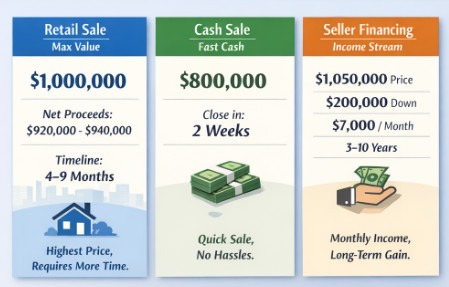
- List with a local agent if the new tax picture is pushing you toward selling and you want full market exposure and are comfortable with showings, repairs, and a longer timeline.
- Sell as-is, on your own timeline, whether that’s on the open market or through a direct cash purchase — more on that below.
None of these is automatically “right.” It depends on your numbers, your plans, and how much time and hassle you want to take on.
Where Patriot Fits — and Where It Doesn’t
A rising tax bill is rarely the only reason someone starts thinking about selling — it’s often the thing that finally forces a decision that was already brewing, whether that’s an aging home needing repairs, a rental that’s become more trouble than it’s worth, or a property you inherited and haven’t settled on a plan for. In those cases, a direct cash purchase can make sense: no repairs, no staging, no financing contingencies, and a closing timeline you set. But if your home is in good shape and a strong local market means listing would net you more, we’ll tell you that too — a direct cash purchase is one option, not the only one, and an honest conversation should always include the on-market path.
A Local NJ Note
Essex County’s revaluation rollout has touched a dozen-plus municipalities in stages, with more towns scheduled through 2028 — so a neighbor’s experience last year may not match yours this year. If you’re unsure whether your town has a revaluation in progress, your municipal tax assessor’s office or the Essex County Board of Taxation can confirm your status and appeal deadline.
A quick note: this isn’t tax or legal advice — for questions specific to your assessment or an appeal, talk with your municipal assessor, a New Jersey-licensed attorney, or a tax professional. Outcomes vary by property and situation.
You’re not the first Essex County homeowner to open a reval notice and feel unsure what it means — and you won’t be the last. Take the time to understand your new number before you decide anything.
Talk to Patriot — no pressure, no obligation. Call or text anytime.